Andrea Appiani
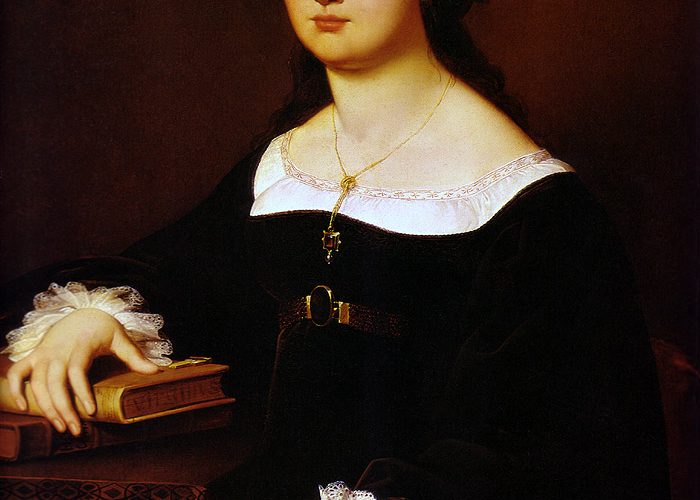
I found a few wonderful pieces by Andrea Appiana (1745-1817) (an artist whose work I was only vaguely aware of previously) and I thought I should share them with you all.

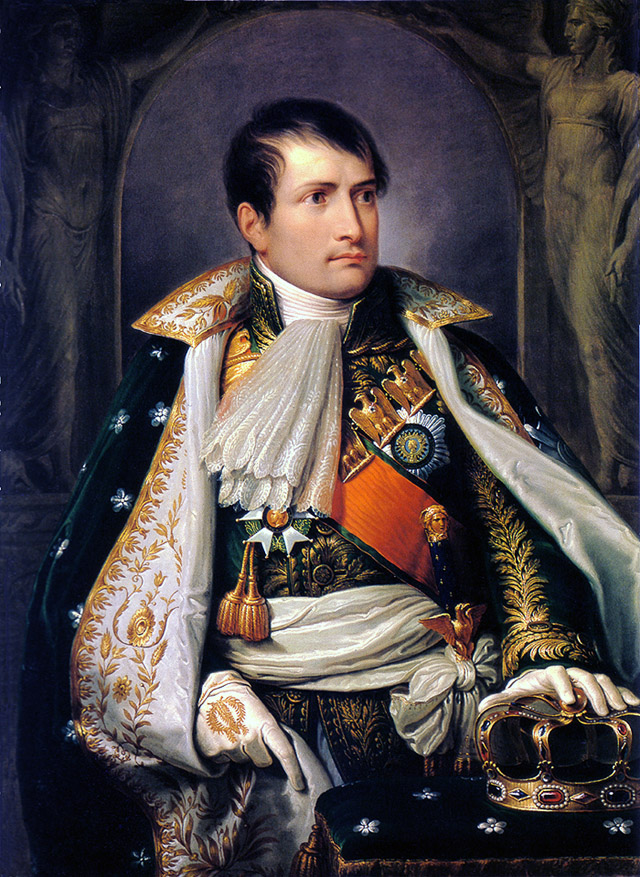
Andrea Appiani, Napoleon, Kingof Italy, 1805

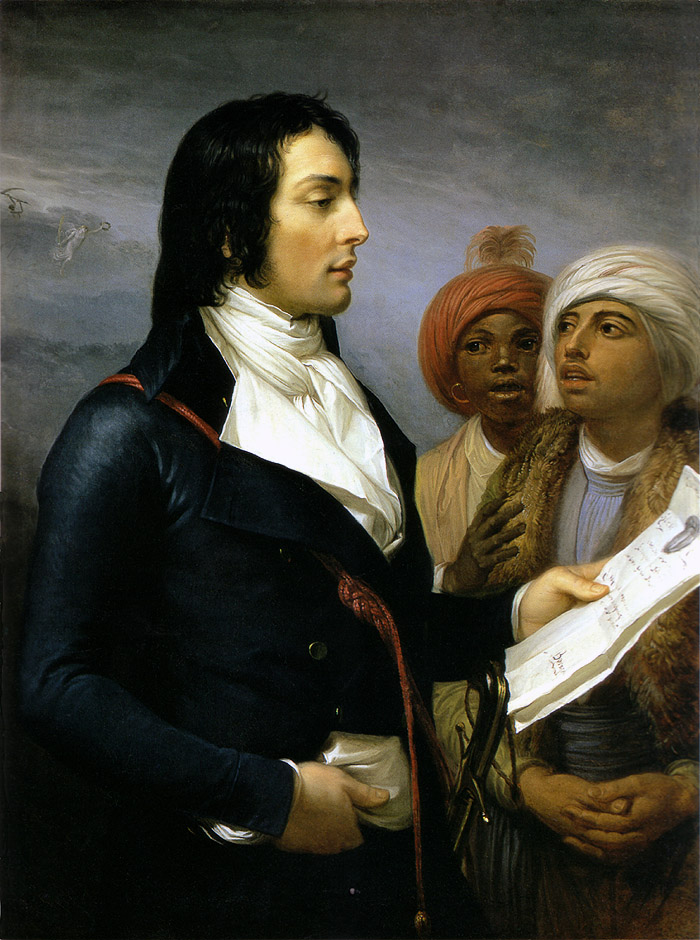
Andrea Appiani, General Desaix, 1801
(The small figures in the background represent Time being pursued by Death.)

Andrea Appiani, Napoleon, Kingof Italy, 1805

Andrea Appiani, General Desaix, 1801
(The small figures in the background represent Time being pursued by Death.)


2 Comments:
I think your idea of 'good art' is nonsense. You say that "good art is any art which is very effective at expressing its idea and accomplishes that expression through the means peculiar to art". You say as well that Picasso made bad art according this definition.
I think you are wrong in case of the Guernica, which perfectly expresses the cruelty and the madness of the Spanish Civil War. That is why it is so important for the Spanish people and why it deserves a special building in the centre of Madrid near the Prado museum. Hence, when you would say it does not very well expresses a partiuclar idea, I think it says more about you than about the painting (maybe you do not know the story of the village Guernica in the Spanish Civil War)
You might say one should always be able to recognize the idea in a painting, even when one has never heard about the idea before. However, in that case a lot of artists are also 'not good' according your definition. When you have never heard about the Bible, for example, you will never understand anything of many paintings of masters like Velazques, Rubens or Rembrandt. So, the recognition of a particular idea in a painting depends as well on the spectator.
Moreover, when I will paint Rembrandt's Nachtwacht today, it is not art, although everyone understands the idea behind it perfectly and I accomplished that expression through the means peculiar to art. So, you forgot the idea of uniqueness which is crucial in good art. In this respect Picasso is also really a great artist. Take a look at his masterpiece Bull's Head. This is pure art because it expresses an idea in an absolute unique way while it is still made from familiar stuff.
You can say a lot about art, but when you say Picasso made bad art, then you are really disqualifying yourself.
By Charles Dupé, at 1:17 PM
>I think your idea of 'good art' is nonsense. You say
>that "good art is any art which is very effective at
>expressing its idea and accomplishes that
>expression through the means peculiar to art".
Subsequent stuff aside, would you not agree with at least this much? Or do you think that there's some other standard by which art should be judged?
>You say as well that Picasso made bad art
>according this definition.
That's right.
>I think you are wrong in case of the Guernica,
>which perfectly expresses the cruelty and the
>madness of the Spanish Civil War. That is why it is
>so important for the Spanish people and why it
>deserves a special building in the centre of Madrid
>near the Prado museum.
It of course IS famous and has all kinds of attention showered on it. Whether that attention and praise is justified is another matter entirely and is a subject you have not even commented upon. Can you justify your evaluation by anything other than an appeal to fame or popularity?
>Hence, when you would
>say it does not very well expresses a partiuclar
>idea, I think it says more about you than about the
>painting (maybe you do not know the story of the
>village Guernica in the Spanish Civil War)
Not at all. There's not one shred of anything in that painting that says anything about the Spanish Civil War in general or Guernica in particular. It is rather disorderly as are most of his paintings, but given his scope of paintings which tend toward the ugly, misshapen, and chaotic, it doesn't seem particularly indicative of chaos, Spain, war, Guernica, or anything else in particular other than perhaps a troubled mind and a lack of concern for artistic competence.
>You might say one should always be able to
>recognize the idea in a painting, even when one
>has never heard about the idea before. However, in
>that case a lot of artists are also 'not good'
>according your definition.
I wouldn't go that far. There are of course things that one can reasonably assume that someone in the audience might know (like for example, what language they speak, common mythological figures, etc.) but a painting that depends entirely on such meaning for his art to have any meaning isn't really creating art at all. He's just making a direct reference to some cultural understanding rather than creating an artistic representation that uses that cultural context.
In the case if someone knew that Guernica had something to do with the Spanish Civil War (which I would imagine lots of people do since it's a famous painting) that actually contributes nothing to the understanding of the message of the painting. By contrast, a painting of a dying sunset behind a hill with three crosses on it would present a great deal more information if one understood the contextual meaning of the cross in Christian mythology. Knowing that the painting is "about the Spanish Civil War" tells me nothing about what the bull represents, what the horse represents, what the big eye symbol means, what the little candle means, what the various crude human figures are doing (aside from the ones who appear to be suffering or dying perhaps).
>When you have never
>heard about the Bible, for example, you will never
>understand anything of many paintings of masters
>like Velazques, Rubens or Rembrandt. So, the
>recognition of a particular idea in a painting
>depends as well on the spectator.
There's some truth to that, though even someone who knew nothing of Christian mythology could look at a Rubens painting and get something of what was going on even if they couldn't understand all of the symbology. This fact however doesn't justify the conclusion adopted by many modernists that the meaning form a work of art arises from the viewer and not the art or the artist.
>Moreover, when I will paint Rembrandt's
>Nachtwacht today, it is not art, although everyone
>understands the idea behind it perfectly and I
>accomplished that expression through the means
>peculiar to art.
I don't understand what you mean there. Why is that not art?
>So, you forgot the idea of
>uniqueness which is crucial in good art.
Why is that so crucial? I would agree that any time someone takes an independent attempt at expressing an idea the result will be unique (just as a journalist's report of a house fire will also be unlike any other journalists's report) but I don't see that as a core issue even though works of art are not identical to one another.
>In this respect Picasso is also really a great artist.
Not really. That is just novelty, which in and of itself is neither good nor bad. In his case, bad.
>Take a
>look at his masterpiece Bull's Head. This is pure art
>because it expresses an idea in an absolute unique
>way while it is still made from familiar stuff.
Why is novelty necessarily good?
>You can say a lot about art, but when you say
>Picasso made bad art, then you are really
>disqualifying yourself.
I would say just the opposite. Anyone who claims that Picasso was anything but a fraud (which he admitted directly by the way) disqualifies himself from serious discussion of art IMHO.
--Brian
By Brian Yoder, at 5:12 PM
Post a Comment
<< Home