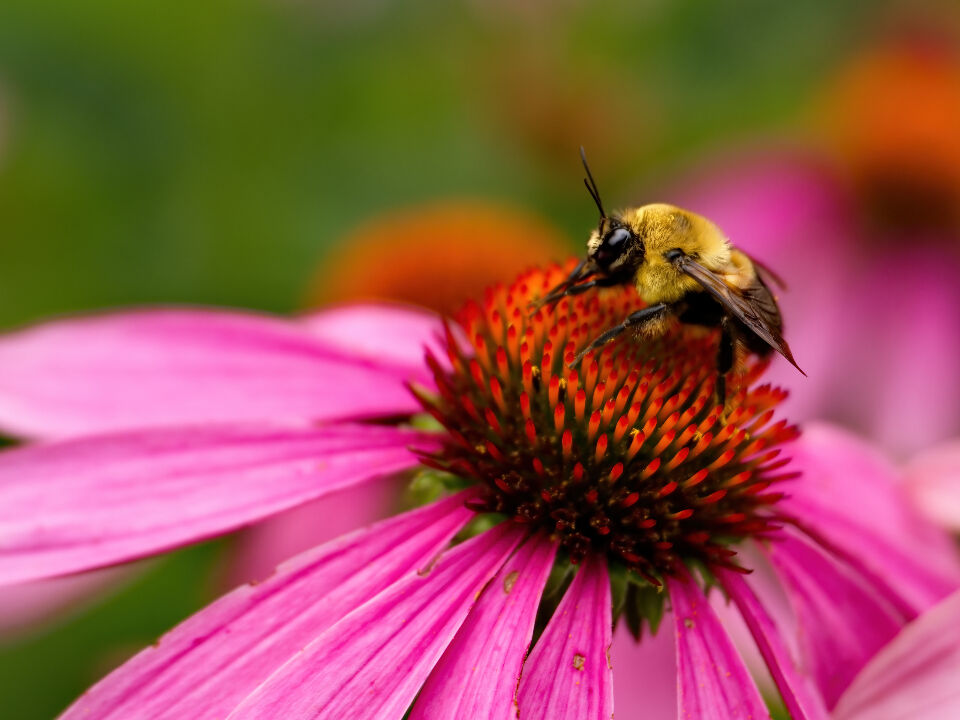
A garden full of flowers is not always a garden full of food for bees. Layout, plant choice and a few small extras decide whether pollinators visit and stay. Good pollinator design can still look tidy and planned.
Australia has more than 1,500 species of native bees, according to local council guides. Many of them share home gardens with the European honey bee. This guide covers how to plan beds, choose plants and add water and nesting spots.
Get to know the bees you are designing for
Most native bees do not live in hives. Southern Downs Regional Council says 99 per cent of Australia’s native bee species are not social. Each female usually builds her own nest in the ground, in soft timber or in a hollow. That changes how a pollinator garden should be laid out.
Stingless bees are the social exception. CSIRO notes that species such as Tetragonula carbonaria and Austroplebeia australis suit the Top End and eastern Australia, though not Victoria. They are under five millimetres long and their stingers have wasted away. That makes them a gentle choice for a home garden in the right climate.
Blue banded bees are another visitor worth planning for. The City of Whitehorse describes them as buzz pollinators that shake their whole bodies to release pollen. CSIRO notes they are good at pollinating tomatoes, capsicums and chillies. A vegetable patch with flowering borders gives them a reason to stop by.
Little is known about many of these species. CSIRO points out that only three native bees have an official conservation status, all in Western Australia. That gap in knowledge is one more reason to give every species a chance in your own yard.
Choose plants with pollen and nectar
Not all flowers offer the same reward. The CSIRO guide on making your garden native bee friendly lists Banksia, Callistemon and Melaleuca as high in both pollen and nectar. Macadamia and Leptospermum are rich in nectar but offer little useful pollen. Some wattles are high in pollen, so a mix of these plants covers both needs.
Local plants are best. CSIRO recommends plants indigenous to your own area over plants from elsewhere in Australia. Your council can usually point you to species that grow wild nearby. Herbs such as lavender and sage also appear on the Wyndham City Council bee planting list.
Think about the whole planting plan rather than single specimens. Our guide on how to choose plants for your landscape design covers soil, sun and space. Apply those same checks to each flowering plant on your pollinator list. A plant that struggles will not flower well.
Plant in groups and flower through the year
Bees forage more easily in clumps. The City of Whitehorse gardens for wildlife bee guide recommends planting in groups of the same species. It also suggests choosing plants with a range of colours, shapes and sizes. Southern Downs Regional Council notes that beds or rows of one species attract native bees more than scattered plants.
Timing matters too. Whitehorse suggests plants that flower through spring, summer, autumn and winter. Map out flowering times when you buy plants so there are no long gaps in the calendar. A label or nursery tag will usually list the flowering season.
Shallow flowers suit many small ground bees. CSIRO mentions daisies as a good example. It also suggests letting some weeds flower in spring before you remove them, as they give early forage. Easy care lawns and conifers offer very little.
Add water, shelter and somewhere to nest
Bees need a drink on hot days. Whitehorse suggests a shallow dish of water placed among plants, with stones so bees can climb out. The City of Port Adelaide Enfield bee bath instructions say to keep the tops of the rocks dry as landing pads. Refresh the water often so it stays clean.
Nest sites are just as important as flowers. CSIRO says ground nesting bees need open soil that is reasonably compacted and well drained. Leaving a sunny patch of open ground gives them a place to dig. Whitehorse also suggests flat rocks where bees can sun themselves.
Timber nesters need other options. CSIRO suggests a rotting log with holes drilled into it for carpenter bees. Bee hotels made from cut bamboo or cardboard tubes suit cavity nesting species. Mount them on a tree trunk or wall that is sheltered from the weather.
Leaf cutter bees use foliage to build their nests. CSIRO notes they need soft, broad leaves such as rose or Hardenbergia leaves. If you are planning a rose garden design, neat circles cut from the leaf edges are a sign these bees are at work. Many gardeners choose to leave them be.
Skip the insecticides
Sprays that kill garden pests also kill bees. Southern Downs Regional Council advises avoiding insecticides for this reason. Whitehorse lists no insecticides as one of the basics for a bee garden. Picking pests off by hand and accepting a little leaf damage are gentler options.
Pollinators also help your edible garden. Wyndham City Council notes that bees pollinate flowers as they forage, which helps fruit and vegetables grow. A honey bee can visit between 50 and 100 flowers on one trip, according to the same guide. Planting flowers near the vegetable patch puts that work right where you need it.
Fitting pollinator planting into any site
Sloping or awkward blocks can still feed bees. Terraced beds and banks are good spots for clumps of flowering shrubs and groundcovers. Our article on landscape design ideas for tricky terrain has ideas for shaping those spaces. A dry, sunny bank with well drained soil may even suit ground nesting bees.
Modern gardens with hard surfaces need softening. If your plans include glass features in landscape design such as balustrades or screens, run planter beds along their base. Courtyards and balconies can hold pots of herbs and native shrubs. Even a small space can offer food if it flowers across the seasons.
Frequently asked questions
How many native bee species live in Australia?
Council guides put the number at more than 1,500 species. Wyndham City Council gives a figure of over 1,700. Most of them are solitary rather than living in hives.
Are stingless bees safe in a home garden?
CSIRO says their stingers have wasted away, so they are not a sting risk. It lists Tetragonula carbonaria and Austroplebeia australis as species to consider. They suit the Top End and eastern Australia, but not Victoria.
What should I put in a bee hotel?
CSIRO suggests cut bamboo or cardboard tubes for cavity nesting bees. Mount the hotel on a tree trunk or wall away from rain and wind. Southern Downs Regional Council notes that solitary bees will still use bee hotels.
Which plants are best for bees?
Banksia, Callistemon and Melaleuca are high in both pollen and nectar, according to CSIRO. Plants native to your local area are the best choice. Plant them in groups and choose species that flower in different seasons.
A pollinator garden works best as a whole system. Food, water, shelter and a break from sprays all play a part. Start with a few clumps of local flowering plants and add nesting spots over time.